

How to Choose the Right Lighting for a Jewelry Store
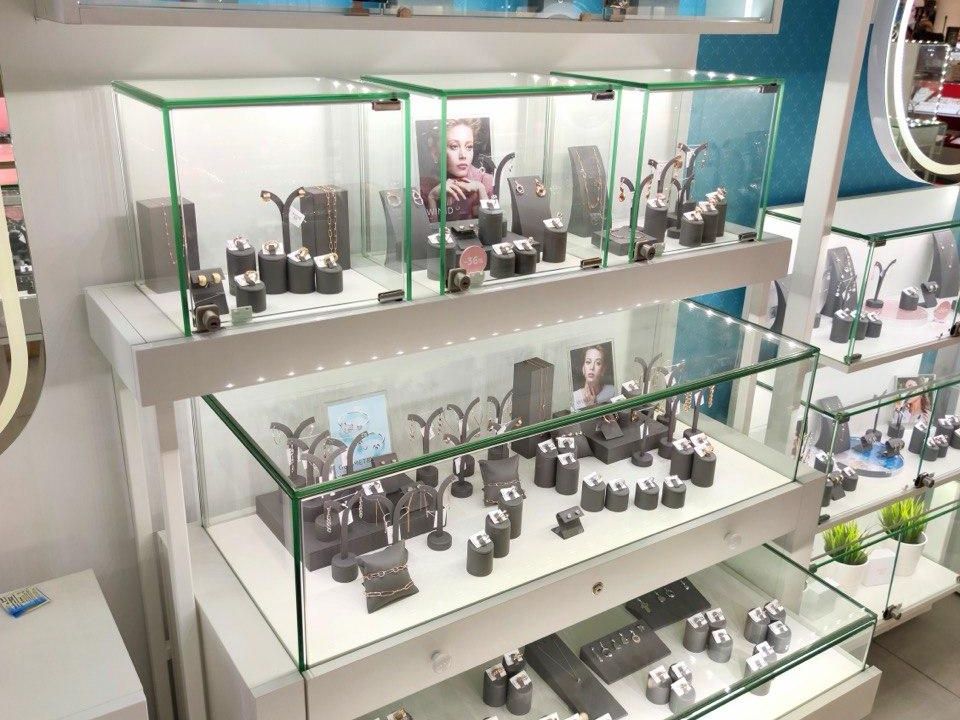
How to Choose the Right Lighting for a Jewelry Store
Lighting plays a key role in how customers see jewelry. Gold, silver, diamonds and gemstones can look completely different depending on the light source, color temperature and beam angle.
For a jewelry store, lighting is not only about making the space bright. The main goal is to present the products attractively, highlight their details and create a comfortable shopping environment.
Why Lighting Is So Important in Jewelry Stores
Jewelry contains many reflective surfaces. Diamonds and gemstones interact with light differently from metal, glass or matte materials.
Poorly selected lighting can make jewelry look flat, create unwanted reflections or make the products lose their visual appeal.
Professional lighting helps to:
- highlight individual products;
- emphasize the brilliance of diamonds and gemstones;
- reveal the texture and color of metals;
- create visual accents inside display cases;
- guide customers' attention;
- create a premium atmosphere in the showroom.
The lighting should therefore be considered as part of the overall interior and product presentation.
Choose the Right Color Temperature
Color temperature has a significant effect on the appearance of jewelry.
Warm light can create a comfortable and elegant atmosphere and works particularly well with gold and warm-colored materials.
Neutral white light provides a more natural appearance and can be useful when accurate product colors are important.
For many jewelry stores, a color temperature in the 3000–4000 K range can be a practical starting point, but the final choice should depend on the interior design, materials and type of jewelry.
The important thing is consistency. Different areas of the showroom should not have noticeably different light colors unless this is part of the lighting concept.
High Color Rendering Is Essential
Color rendering is particularly important when customers are choosing jewelry.
A high CRI (Ra) helps products appear closer to their natural colors. This is especially relevant for gemstones, colored stones and different types of metal.
For professional retail lighting, it is generally preferable to use high-quality LED modules with a high color rendering index rather than choosing a luminaire based only on its wattage or brightness.
Use Directional Light to Highlight Products
General ambient lighting creates overall illumination, but jewelry usually needs additional accent lighting.
Directional luminaires can focus light exactly where it is needed.
For example:
- narrow beams can create strong accents on individual displays;
- medium beams can illuminate groups of products;
- wider beams can provide more uniform illumination of larger display areas.
The correct beam angle depends on the distance between the luminaire and the display, as well as the size of the illuminated area.
Avoid Uncontrolled Reflections
Glass display cases and polished jewelry can create strong reflections.
This is one of the reasons why simply increasing the amount of light is not always the right solution.
The position, beam angle and direction of the luminaires should be considered together with the position of the display cases.
A professional lighting design can help reduce unwanted reflections while maintaining sufficient illumination of the products.
Combine General and Accent Lighting
A successful jewelry store lighting system usually combines several layers of light.
General lighting
Provides comfortable illumination throughout the showroom and helps customers move around the space.
Accent lighting
Draws attention to specific displays, collections or products.
Decorative lighting
Supports the interior concept and creates the desired atmosphere.
Combining these layers allows the lighting to be both functional and visually attractive.
Lighting Design Should Start Before Installation
One of the most effective ways to avoid lighting problems is to plan the system before installation.
At DIODIKA, lighting projects can include:
- selection of suitable luminaires;
- lighting calculations;
- beam angle selection;
- color temperature selection;
- photometric data and IES files;
- luminaire placement;
- production of custom lighting fixtures;
- installation of the lighting system.
Lighting calculations can help determine whether the selected luminaires will provide the required illumination and how the light will be distributed throughout the showroom.
The Best Lighting Is Designed for the Product
There is no single luminaire that is perfect for every jewelry store.
The right solution depends on the interior, ceiling type, display layout, products, mounting height and desired visual effect.
For this reason, professional retail lighting should be designed as a complete system rather than selected only by power or appearance.
DIODIKA develops and manufactures professional LED lighting solutions for retail spaces, showrooms and commercial interiors. We can design a lighting solution according to the architecture and requirements of your project.